Everything DiSC® vs Insights Discovery®

DiSC or Insights? Both are excellent. Here's how to choose.

A practical comparison of Everything DiSC® and Insights Discovery®, written for HR, Talent and L&D leaders weighing the decision — from the only Irish partner authorised for both.

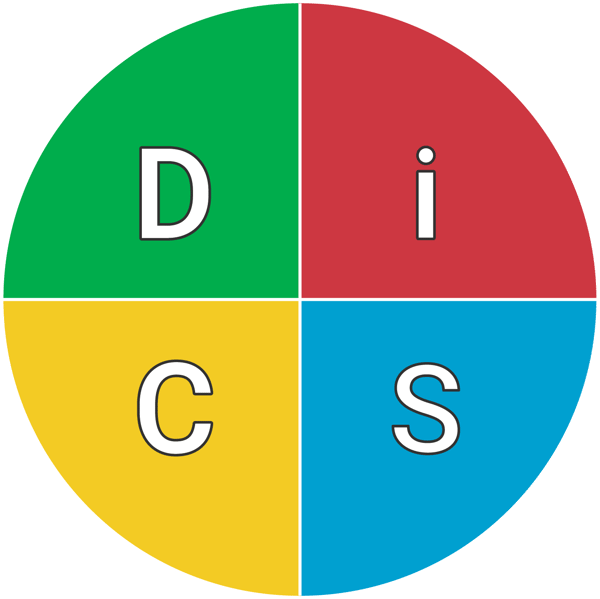
Everything DiSC circumplex showing the four DiSC styles: Dominance, influence, Steadiness and Conscientiousness
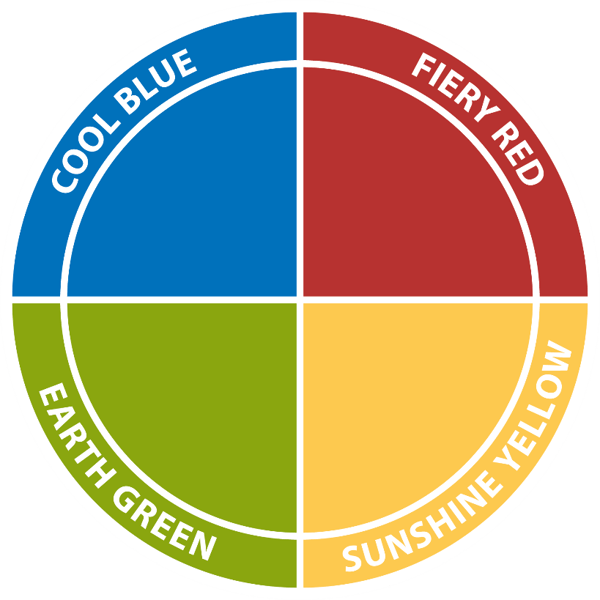
Insights Discovery four-colour wheel showing the Cool Blue, Fiery Red, Earth Green and Sunshine Yellow colour energies
Everything DiSC® Insights Discovery®
The short answer

The short answer

Both Everything DiSC® and Insights Discovery® are well-established behavioural development tools used by leadership teams across the world. They are different. The right choice depends on what you're trying to achieve, who you're trying to reach, and how you want the tool to live in your organisation after the workshop ends.

DiSC tends to fit organisations that need behavioural clarity at scale, with an ongoing platform staff can return to. Insights tends to fit organisations investing in deeper self-awareness for leaders and senior teams. Many organisations use both — DiSC for breadth, Insights for depth.

The rest of this page is the longer version of that answer.

At a glance

How they compare

Everything DiSC® Insights Discovery®
Theoretical roots Behavioural; based on William Marston's DISC model, developed by Wiley Psychological; based on Carl Jung's typology, developed by Insights Learning & Development
Core model Four styles: Dominance, influence, Steadiness, Conscientiousness Four colour energies: Fiery Red, Sunshine Yellow, Earth Green, Cool Blue
Profile output Visual, accessible, tactical (~20 pages, application-specific) Narrative, archetype-rich (20–40 pages, deep)
Ongoing platform Catalyst™ — ongoing access, comparison reports, learning library Profile plus accredited practitioner community
Best fit Scaled rollout; team integration; sales, management and productive-conflict applications Leadership development; senior team forming; coaching contexts
Time to land Faster — landing in a half-day workshop is realistic Slower — depth takes longer to grasp and apply
Investment shape Lower per-profile cost; broader scaled use Higher per-profile cost; smaller senior cohorts
Cultural fit US-anchored, strong globally Particularly strong in the UK, Ireland and parts of Europe
Application range Workplace, Management, Sales, Productive Conflict, Agile EQ, Work of Leaders Discovering Self, Leadership, Sales Effectiveness, Team Effectiveness
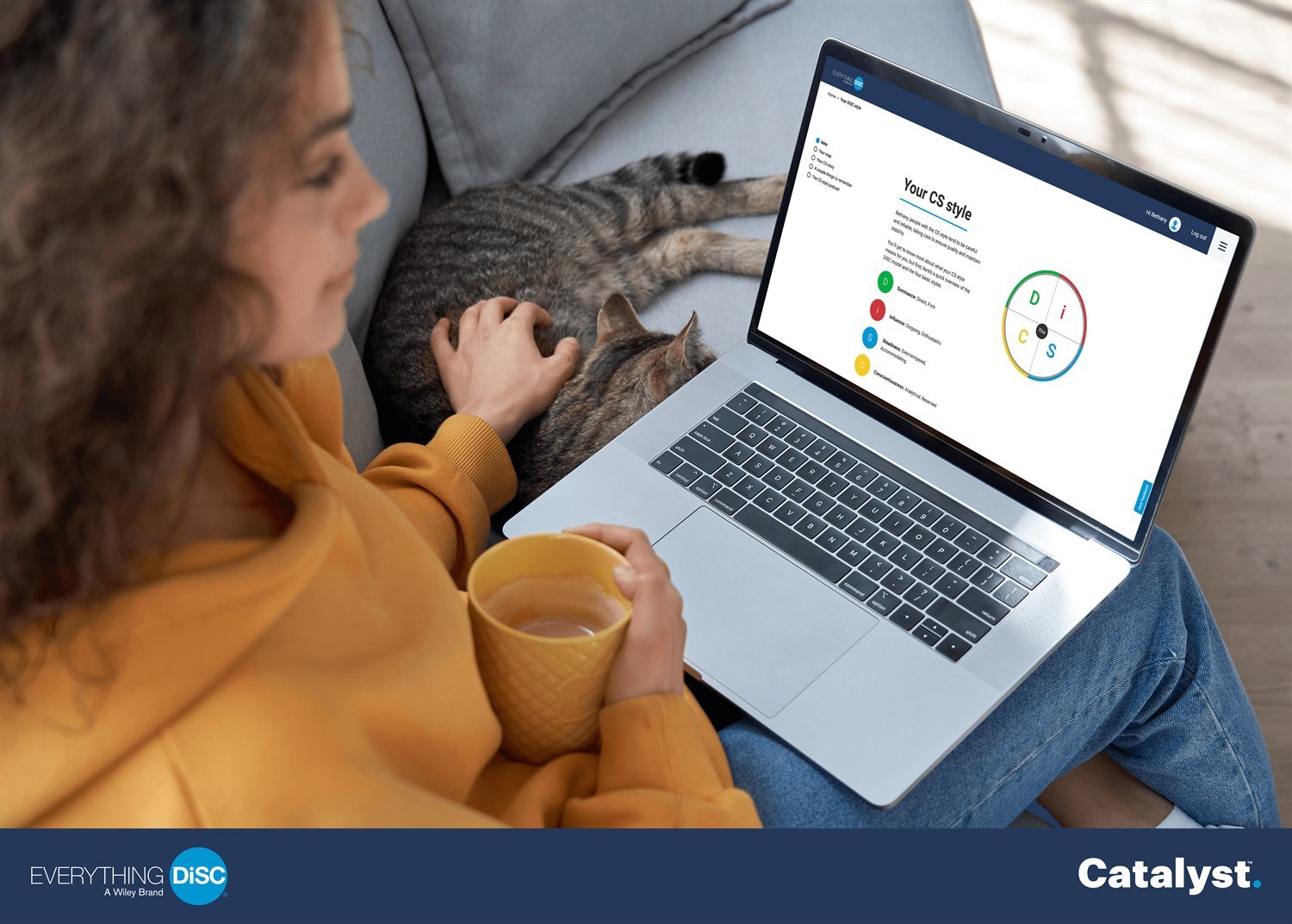
A professional reviewing her personalised Everything DiSC style profile on the Catalyst platform on a laptop

When Everything DiSC fits

DiSC fits when behavioural clarity needs to spread quickly across a wide group, and when you want the tool to remain present after the workshop ends. Catalyst™ gives users ongoing access to their own profile, side-by-side comparisons with colleagues, and a growing library of application content. That makes DiSC particularly well-suited to scaled rollouts — whole functions, leadership pipelines, sales teams.

The application packs are the second strength. Everything DiSC Workplace, Management, Productive Conflict, Sales and Agile EQ each adapt the four-style model to a specific use case. A sales team using DiSC Sales isn't learning a generic theory and applying it themselves; they're using a tool already built for the conversations they need to have.

DiSC also tends to be the easier internal sell. The model is intuitive within minutes. Profiles are visual and accessible. Adoption friction is low.

Choose DiSC when you want shared behavioural language to live in everyday work, not only in leadership conversations.

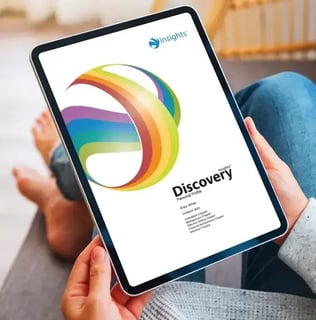
Insights Discovery personal profile shown on a tablet, illustrating the colour-energy narrative report

When Insights Discovery fits

Insights fits when self-awareness is the actual goal, and when there's space to take a tool more deeply rather than more broadly. The colour-energy model is rooted in Jungian psychological types, and the profile reads as a narrative — twenty or more pages on how a person is wired, what they bring at their best, what shows up under pressure, and how others are likely to experience them.

That depth is the strength. Senior leaders, executive teams, and anyone who has "done the workshops before" tend to land more deeply with Insights. It doesn't feel training-y. The profile invites reflection rather than instruction.

Insights also lands particularly well in Irish, UK and European leadership cultures. The language is restrained, the framing is psychological rather than behavioural, and the resulting conversations tend to be more reflective. For senior teams that need to form, not just function, that depth matters.

Choose Insights when you're investing in fewer people more deeply, when self-awareness is the outcome that matters, and when the tool needs to feel like a peer to your senior team rather than a curriculum delivered to them.
The richer answer

When the answer is 'both'

Many organisations use both tools, and that's not a hedge. It's a deliberate choice based on different jobs.

A common pattern: Everything DiSC at scale across the wider organisation — managers, frontline teams, new starters. Insights Discovery for the senior leadership group, executive coaching, and high-stakes team-forming work where depth matters more than reach.

This works because the two tools aren't competing for the same square inch. DiSC is the day-to-day behavioural operating system. Insights is the depth tool for the moments that warrant it. Used together, they give an organisation both breadth and depth without overlap.

The investment case for using both is straightforward: you're not paying twice for the same outcome. You're paying for two different outcomes that share one conviction — that behavioural clarity makes leaders and teams better.

This is also where being a dual-authorised partner matters commercially. There's no incentive to push one tool over the other. The recommendation is based on the work you're trying to do.

A quick decision filter

Which tool fits you?

Answer 8 quick questions for an instant, unbiased recommendation — about two minutes. There are no wrong answers; it just surfaces which tool fits your situation.

Question 1 of 8


Your result

See exactly why — and get the guide

Unlock your full breakdown and the 5-page Decision Guide. We'll email you a copy too.

Want a second opinion on your result? That's exactly what the scoping call is for.

The honest version

What the research really says

It's worth being straight about this, because most providers won't be. Both tools are usually sold as "scientifically validated." The more accurate picture is that the published, peer-reviewed evidence base for behavioural tools like these is thinner than the marketing implies — and where studies do exist, they're often dated or limited in how they were designed. Insights Discovery in particular has very little independent published validity research; much of what is known about both tools sits in proprietary technical reports rather than open literature.

The gap is in the research, not necessarily in the room.

That distinction matters. A thin published evidence base isn't the same as a tool that doesn't work — it means the rigorous, independent research simply hasn't been done at the scale the marketing suggests. It also means these tools should be judged on what they're actually for. DiSC and Insights are development tools, not selection or predictive instruments. Judged on the right criteria — consistency, giving teams a shared language, and prompting conversations that wouldn't otherwise happen — they earn their place. Judged as predictors of who to hire or promote, neither holds up, and neither should be used that way.

One more thing the science is clear on: behavioural traits sit on a spectrum, not in boxes. So any "style" or "colour" is a useful starting point for a conversation, not a verdict on a person. Used that way — as a lens rather than a label — both tools are genuinely valuable. Oversold as hard science, both invite the scepticism they sometimes get.

David O'Grady, dual Everything DiSC and Insights Discovery Authorised Partner, Ireland
Why this comparison comes from David

No one else in Ireland is positioned to write this

I'm Ireland's only dual Everything DiSC® and Insights Discovery® Authorised Partner. I established Insights Discovery internally at 3M and Everything DiSC internally at HubSpot — both before I became an authorised partner for either. I've run the integration work, the certifications, the team forming, and the leadership development with both tools, in real organisations under real conditions.

My background is in organisational behaviour — I hold an MSc in Work and Organisational Behaviour from the Kemmy Business School at the University of Limerick. That's part of why I'm comfortable being straight with you about what the research does and doesn't show, rather than repeating either tool's marketing.

Every other provider in the Irish market is partnered with one tool or the other. That commercial reality means their recommendation is structurally biased — not dishonest, but constrained. Mine isn't. When I recommend a tool to your organisation, it's based on the work you're trying to do, not on which partnership pays my bills.

Make the right call

Make the right call for your organisation

Book a 20-minute scoping call. We'll talk through your context — the audience, the outcome, the budget — and you'll leave with a clear recommendation, even if the answer is that you don't yet need either tool.

Common questions

Frequently asked questions

Is one tool better than the other?

No. Both Everything DiSC® and Insights Discovery® are well-established, widely used behavioural development tools. The right tool depends on what you're trying to do, not on a quality comparison.

Can I use both Everything DiSC and Insights Discovery in the same organisation?

Yes, and many organisations do. A common pattern is Everything DiSC at scale across the wider organisation, with Insights Discovery used for the senior leadership team, executive coaching, and team-forming work where depth matters more than reach.

Which is better for executive coaching?

Insights Discovery tends to fit executive coaching contexts better because of the depth of the profile and the psychological framing. The narrative is rich enough to anchor several coaching conversations, not just one.

Which is better for scaled rollouts?

Everything DiSC tends to scale more economically and lands faster across larger audiences. The Catalyst™ platform also gives a wider workforce ongoing access to their profile, which works well at scale.

Can either tool be used for hiring or selection?

Neither tool is designed for hiring decisions. Both are development tools — they help people understand themselves and others, but they aren't validated as predictors of job performance and shouldn't be used in recruitment selection. For hiring, a different category of assessment such as Hogan or cognitive-ability testing is more appropriate.

How strong is the scientific evidence behind these tools?

Both are best understood as development tools rather than predictive psychometrics. The published peer-reviewed evidence is thinner than the marketing around either tool implies, and much of what exists is dated or limited in design. Used as a lens for self-awareness and shared language, they're genuinely valuable; relied on as predictive or selection science, they're not, and shouldn't be.

I've already invested in one — should I switch?

Usually no. If you have an existing investment in either tool — certified practitioners, a body of profiles, embedded shared language — that investment is valuable and worth protecting. A scoping conversation can identify whether you need to add the other tool for a specific use case, rather than switch wholesale.